






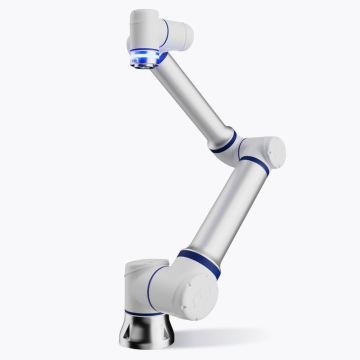
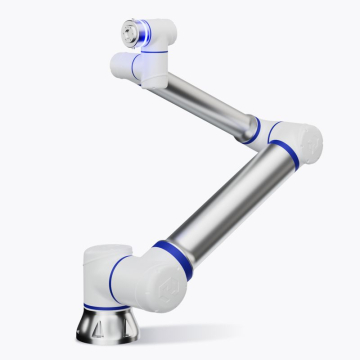
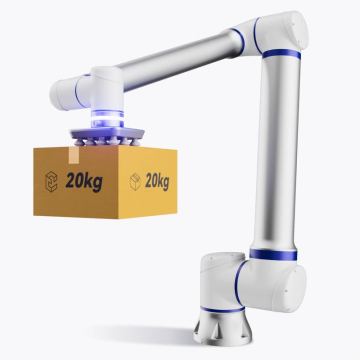

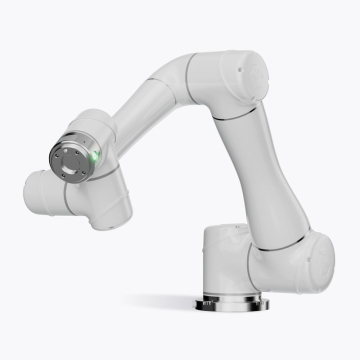
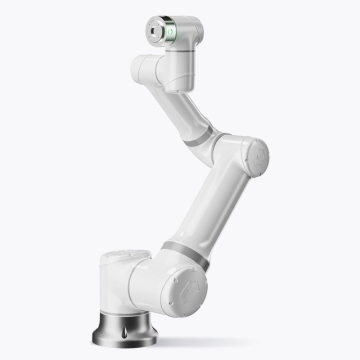
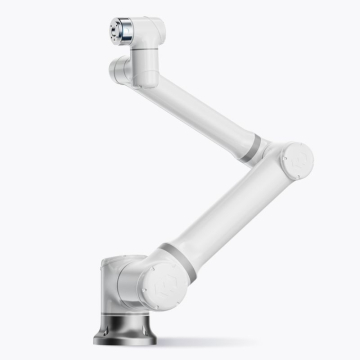
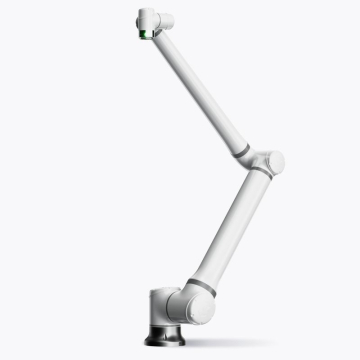

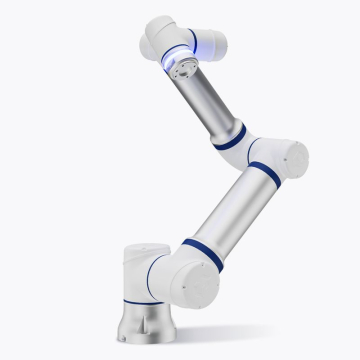
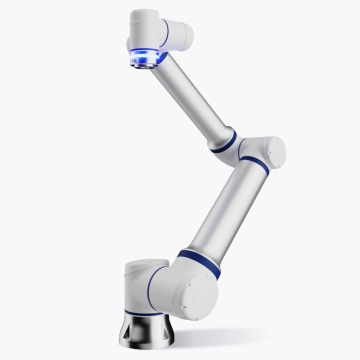
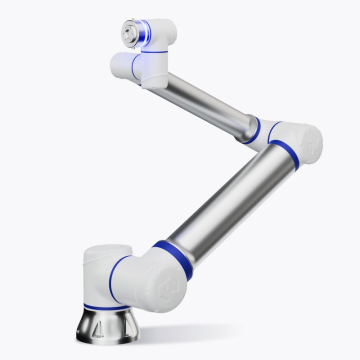

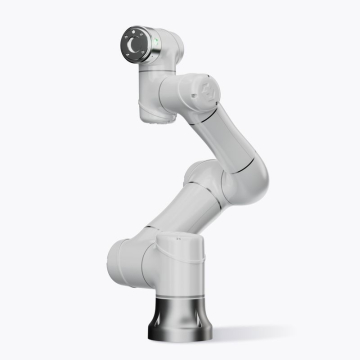
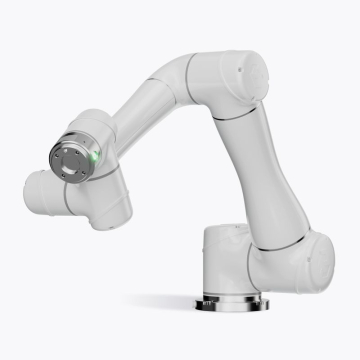
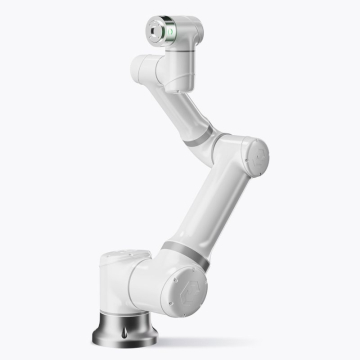
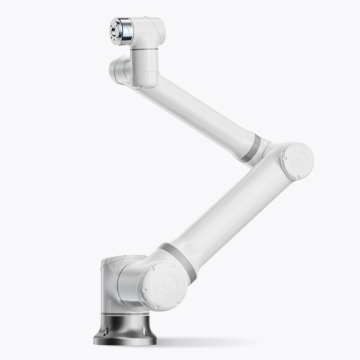

Collaborative robots – a new standard in industry
Collaborative robots are modern solutions that are transforming the face of production automation. Unlike classic solutions, industrial robots of this type can work side-by-side with humans without the need for safety barriers. Thanks to their compact design, intuitive programming, and advanced safety features, industrial robots are increasingly being implemented across various branches of industry.
Production line robotization using cobots
Production line robotization involving cobots allows for a significant improvement in plant efficiency and flexibility. Compared to traditional solutions, collaborative industrial robots are easier to adapt to changing production processes, and their implementation does not require long downtimes.
Whether it involves CNC machine tending, packaging, assembly, or quality control, this new generation of industrial robots can automate repetitive tasks while simultaneously increasing employee safety.
Cobots – what are they and what is their application?
Cobots (collaborative robots) are innovative machines that combine flexibility and safety with high work efficiency. Unlike traditional industrial robots, they do not require complex infrastructure and can be quickly deployed and easily adapted to new tasks.
This makes them ideal for both large production plants and smaller companies that need flexible solutions for process automation. Cobots support operators with repetitive tasks, reducing the risk of errors and increasing productivity.
Cobots – advantages
Cobots are the answer to the growing needs of Industry 4.0. Their advantage lies not only in their versatility but also in their fast return on investment. Implementing a collaborative robot does not require long downtimes or large financial outlays compared to classic automation solutions.
Furthermore, thanks to their modular construction and ease of programming, cobots can be flexibly moved between production workstations, matching their tasks to the current needs of the plant. This makes them particularly valued in dynamically developing industries.
Collaborative robots – support instead of a threat
They find applications in many industrial sectors – from automotive and electronics to logistics and the food industry. They can tend CNC machines and perform packaging, assembly, welding, or quality control processes.
Their greatest advantage is that they relieve employees of monotonous and taxing duties while ensuring full operational safety. Thanks to built-in sensors and advanced algorithms, collaborative robots can stop upon contact with a person, making them an ally to the operator rather than a threat.
The future of automation thanks to cobots
The growing interest in cobots shows that they are not just a temporary trend, but a real standard in modern industry. Companies that invest in collaborative robots gain a competitive advantage through greater flexibility, stable production quality, and improved employee safety.
Collaborative robots are becoming the industrial standard – check out the offer and place your order!
Would you like me to prepare a comparison of the technical safety features between cobots and traditional industrial robots?