



Automation
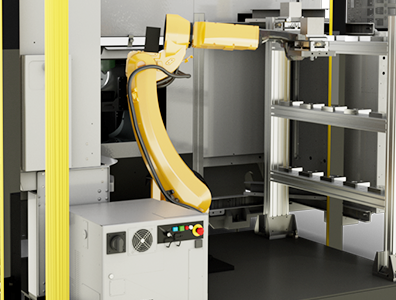
Pallet changers for milling machines
Pallet changers for milling machines are an ideal solution for both mass production and the machining of small batches with high variety. Upon completion of work, pallets are automatically returned to storage or can be transported to a secured operator station for immediate unloading and reloading.
 ```
```
 ```
```
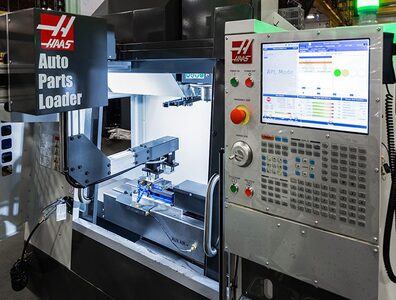
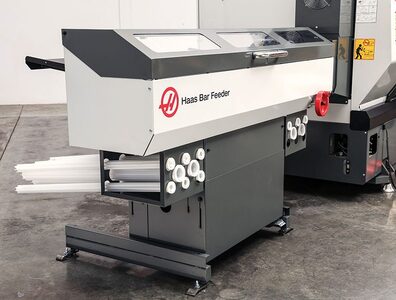
Universal Robotic Cells
Modern robotic cells are designed to automate the servicing of CNC machines, such as smaller and medium-sized machine tools and cylindrical grinders. Standard cell models are delivered with complete tooling and integration with the chosen machine, offering an exceptionally competitive price-to-performance ratio.

Automation
The production process is a dynamic system of dependencies in which every change can affect the final outcome. Automation of the packaging and production processes is an investment in the company's future, allowing for faster task execution, optimal resource utilization, and waste reduction.
Automation – modernity in every aspect
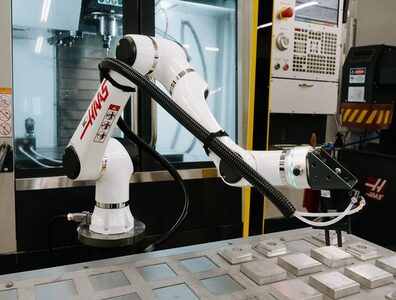
The solutions offered by Abplanalp, such as collaborative robots (cobots) and advanced control systems, transform traditional production lines into modern, fully automated systems.
Tailored solutions – industrial production automation
Industrial production automation requires an individual approach and an understanding of the specific characteristics of a given industry. At Abplanalp, we not only provide technology but also adapt it to the unique needs of our customers.
Professional production automation
Thanks to years of expertise in production processes, we offer solutions that increase efficiency, improve product quality, and optimize production space. Our automation systems, ranging from pallet changers to comprehensive machine-tending robots, allow for the full realization of a company's potential.
Production Automation is the Future
Industrial production automation is the future that is happening right now. Thanks to our solutions, enterprises can not only achieve a higher level of efficiency and quality but also effectively face the challenges of the modern market.
Abplanalp is a partner that understands the needs of industry and provides comprehensive automation systems tailored to every production line and process. Our specialization is machine tending automation – we have a deep understanding not only of automation but, above all, of what we are automating. We encourage you to contact us!
Industrial production automation
The modern market is changing faster than ever, and enterprises are faced with the necessity of implementing solutions that will increase efficiency, shorten lead times, and minimize the risk of errors.
Industrial production automation has therefore become not only a natural direction of development but often the only way to remain competitive. Introducing robots, control systems, or autonomous workstations allows companies to optimize processes and effectively manage resources.
Production automation – when does it make the most sense?
The decision to implement automation is not always simple, but in many cases, it brings immediate benefits. Production automation proves its worth particularly where repeatability, pace, and employee safety are critical. It is also an answer to rising labor costs or difficulties in recruiting qualified operators.
Where does production process automation provide the greatest advantage?
-
in series or mass production,
-
in repetitive, monotonous tasks,
-
where high precision and minimal error tolerance are required,
-
in environments that may pose a threat to the employee.
Which elements are worth automating first?
-
internal transport and logistics,
-
assembly stations,
-
quality control,
-
product packaging and kitting.
Increasing market pressure and technological development mean that production process automation now includes not only industrial robots but also vision systems, IoT sensors, and software for real-time data monitoring and analysis. As a result, enterprises are able to react faster to failures, plan production better, and manage costs effectively.
Production process automation – is it an investment that pays off?
Implementing automation requires capital expenditure; however, in the long run, it is a solution that typically generates savings. It reduces the number of errors, shortens production cycle times, and increases the reliability of the entire system. Additionally, production process automation improves workplace safety by eliminating the most dangerous operations.
Production automation – a step toward the future
Regardless of whether we are talking about small firms or large industrial enterprises, production automation—and more broadly, industrial production automation—is one of the key directions of development today. It is not only a way to increase efficiency but also the foundation of modern process management. In a world where reaction speed and the quality of the delivered product matter, automation is no longer a luxury – it has become a necessity.