



Industrial robot packages
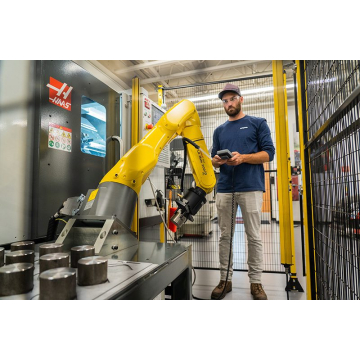



Industrial robots
Industrial robots have become an integral part of modern production. They are used in plants worldwide because they allow for significant acceleration of manufacturing processes, improved product quality, and reduced costs. They are most commonly used in industries requiring repeatability and precision, such as automotive, electronics, logistics, and the food industry.
Advantages of industrial robots
Their greatest advantage is the ability to work continuously, without breaks or fatigue, which translates into uninterrupted production. Industrial robots can perform both simple and complex operations – from assembling components, through welding or painting, to packaging and palletizing. Additionally, they are resistant to harsh environmental conditions, such as high temperature, humidity, or dust, making them irreplaceable where human labor would be dangerous.
The quality aspect cannot be overlooked – industrial robots eliminate most errors resulting from human fatigue or inattention. As a result, products meet strict standards and are more competitive on the market. Importantly, modern robots are increasingly easy to operate and integrate with existing systems, giving smaller enterprises access to this technology as well.
Industrial robotization
Robotization is a process that involves implementing solutions to automate entire production and logistics chains. It is no longer just the domain of large corporations – medium and small companies looking to increase their competitiveness are using it more and more often. By introducing robotics, enterprises can optimize costs, shorten order fulfillment times, and increase production flexibility.
In an era of globalization and rising customer expectations, industrial robotization is becoming a key element of development strategy. It allows for faster reactions to changing market needs and the adaptation of production lines to new challenges. Combined with artificial intelligence systems and data analysis, robots not only perform tasks but also learn to optimize processes.
The social aspect is also significant – robotization raises workplace safety standards. Machines take over duties that require great physical effort, pose health risks, or are performed in difficult conditions. Humans, in turn, gain the opportunity to develop in areas of supervision, planning, and innovation.
Industrial robotization is not a temporary trend but a necessity that, in the long term, determines a company's market position. Investments in robotics pay off not only in the form of savings but, above all, through increased quality, timeliness, and customer satisfaction.