



ABB
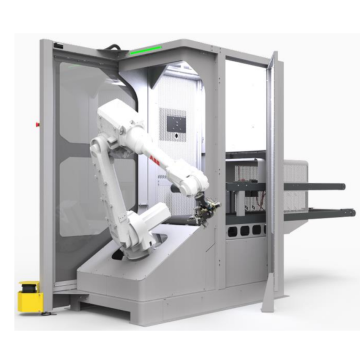

FlexLoader SC 3000 robotic cell with ABB robot
The FlexLoader SC 3000 is a modern robotic cell designed for automating the tending of lathes, utilizing ABB industrial robots. This solution combines a compact, modular design with high configuration flexibility, enabling a significant increase in machine tool utilization and a reduction in operating costs. Thanks to its standardized construction and "plug and play" concept, the system can be quickly implemented in an existing production environment.
The cell is delivered as a complete workstation, including a pre-programmed robot, safety system, and tools that support rapid commissioning and the learning of new workpieces. In practice, this allows for shorter production preparation times and limits the operator's involvement to process supervision.
Robotic cell as a flexible automation tool
As a robotic cell, the FlexLoader SC 3000 provides a high level of flexibility in handling diverse workpieces and production series. The integrated vision system enables automatic recognition and picking of elements without the need for dedicated fixtures or separators. This solution performs well in both short-run production and longer cycles where repeatability and operational stability are key.
The application of a robotic cell allows for a significant increase in the actual utilization of the lathe – from levels characteristic of manual handling to values approaching continuous operation. This translates into a faster return on investment and greater predictability of the production process.
ABB robots in integrated workstations
The FlexLoader SC 3000 utilizes proven ABB robots, such as the IRB 1600 or IRB 2600 models, known for their precision, reliability, and extensive integration capabilities. The robot is a key component of the cell, responsible for workpiece manipulation, synchronization with the machine tool, and the overall fluidity of the cycle.
The use of advanced safety functions and integrated control systems allows the workstation to operate safely in various configurations while maintaining high efficiency and ergonomics.
Would you like me to create a comparison of the technical specifications for the IRB 1600 and IRB 2600 models used in this cell?