



Vertical Turret Lathes
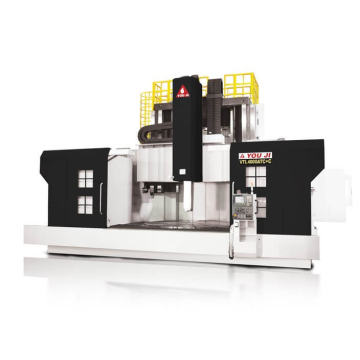

Vertical Turret Lathe (VTL) – What sets this type of machine tool apart?
A vertical turret lathe (VTL) is a specialized machine designed for machining large, heavy, and difficult-to-clamp workpieces, typically those with significant diameters. Its design utilizes a vertical spindle orientation and a rotating table, which provides excellent stability and enables the processing of elements that could not be effectively machined on classic horizontal lathes. This solution is particularly valued in the energy, metallurgical, and machinery industries, where high rigidity and precision are required.
What are the main advantages of vertical turret lathes?
-
Stability during the turning of large workpieces due to the vertical axis orientation.
-
Capability to machine components with large diameters, often exceeding several hundred centimeters.
-
Easier clamping of heavy components, as they rest on the table rather than being suspended.
CNC Vertical Turret Lathe – What new possibilities does numerical control offer? A CNC vertical turret lathe combines traditional vertical construction with the advantages of computer control. Thanks to the CNC system, the operator can precisely program tool trajectories, control cutting parameters, and repeat operations with high accuracy. These machines are used where both precision and repeatability are essential in either series or one-off production.
What does CNC control provide?
-
Process automation, reducing production time.
-
Repeatability of workpiece execution, regardless of complexity.
-
Advanced probing functions and real-time process monitoring.
CNC Vertical Turret Lathes – When is it worth choosing them? CNC vertical turret lathes perform best wherever components with large diameters, high mass, or unusual geometries are being machined. They are chosen by manufacturing companies that prioritize a stable process, a wide range of applications, and the possibility of integration with factory automation.
Main applications of CNC vertical turret lathes:
-
Production of parts for the energy sector: flywheels, rings, housings.
-
Components for heavy industry: bushings, discs, bearing elements.
-
Precision machining of large components requiring stability and repeatability